

Table of Contents
- What Sets Specialized Electronics Retailers Apart
- Specialty Electronics Stores vs. Big-Box Retailers: A Practical Comparison
- Product Knowledge and Technical Advice You Can Trust
- How to Verify Electronics Authenticity Before You Buy
- Electronics Retailer Return Policy and Warranty: What to Check
- Where to Buy Electronics Online Safely
- Total Cost of Ownership: Why the Cheapest Price Isn't Always the Best Deal
- Conclusion: Making the Right Choice for Your Electronics Purchases
- Frequently Asked Questions
Last Updated: October 5, 2026
What Sets Specialized Electronics Retailers Apart
Specialized electronics retailers are stores that focus on a narrow product range and back it with deep technical advice, hands-on help, and after-sales support.
Big-box stores sell everything. Specialty electronics stores sell fewer things, but they know those things cold.
Here is what you gain:
- Staff who use the products themselves
- Curated selections instead of endless aisles
- Help matching accessories to your existing gear
- Technical support after the sale, not just during it
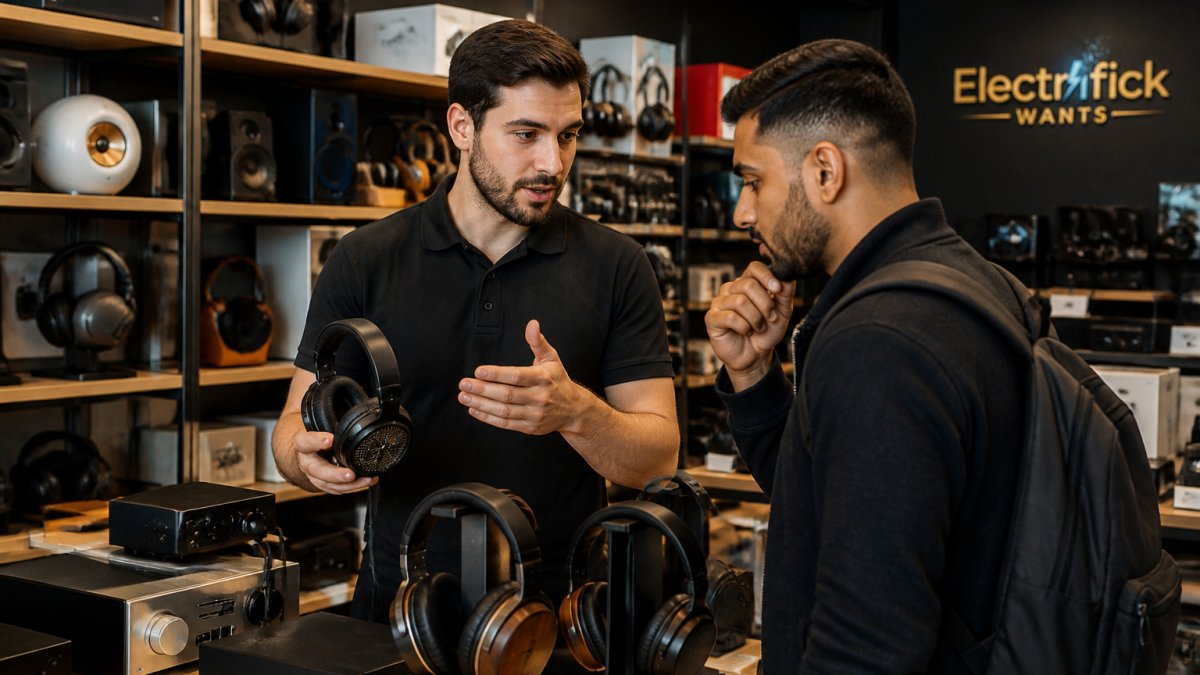
The trade-off is real. You may pay a little more than the cheapest listing online. But you get guidance, a real return path, and someone to call when something goes wrong.
Specialty Electronics Stores vs. Big-Box Retailers: A Practical Comparison
Specialty electronics stores win on advice, curation, and support. Big-box retailers win on volume, one-stop convenience, and broad stock. Neither is wrong for every shopper. The right pick depends on what you are buying, how much help you need, and how much risk you are willing to carry.
| Factor | Specialty Retailer | Big-Box Retailer |
|---|---|---|
| Product knowledge | Deep, category-focused; staff often use the gear | Broad, generalist; staff rotate departments |
| Selection | Curated, quality-first | Huge, hit-or-miss |
| Technical advice | Detailed, hands-on, often demo-driven | Basic, script-based |
| After-sales support | Direct, personal, same team | Often routed to a call center |
| Price | Competitive on quality goods | Aggressive on doorbusters |
| Return path | Clear, staff-handled | Policy-driven, often centralized |
| Warranty handling | Retailer often mediates with the brand | You usually contact the brand yourself |
| Stock depth | Narrow but consistent | Wide but unpredictable |
When Big-Box Stores Make Sense
Big-box stores make sense for cheap, simple items you already understand. If you know exactly which cable, charger, or memory card you need, grab it and go. You do not need advice for a $12 purchase. Convenience wins.
They also work when you need something today and the specialty shop is closed. For a quick replacement, a general retailer is fine.
There is a third case: when you want to compare many brands side by side in one trip. A big-box floor lets you put three soundbars next to each other in ten minutes.
Where Specialty Retailers Pull Ahead
Specialty retailers pull ahead on anything complex or expensive. Audio gear, gaming setups, and specialized equipment all reward good advice. A specialist can tell you whether a speaker pairs with your amp or whether a peripheral works with your console.
What most guides miss is that the real value is not the product. It is the compatibility check before you buy. That single step prevents most returns. A specialist runs that check as a habit; a generalist often cannot, because the same associate covers TVs, appliances, and phones in one shift.
A Decision Framework You Can Actually Use
Run your purchase through these four questions before you choose a channel:
- Is the item complex or interdependent? If it has to work with gear you already own, an amp, a console, a camera body, a specialist saves you a return.
- Is the price high enough that a mistake hurts? Above a few hundred dollars, the cost of one bad pick usually exceeds any sticker savings.
- Do you need it today? If yes, and the specialist is closed, big-box is the pragmatic call.
- Will you need help after the sale? Setup, firmware, warranty claims, and accessory matching all favor a specialist with a real support team.
If you answer "yes" to two or more of the first, second, and fourth questions, a specialist is usually the better channel. If convenience and speed dominate, big-box is fine.
The Trade-Off, Stated Plainly
You may pay a little more at a specialist than the cheapest listing online. In exchange you get guidance, a real return path, and someone to call when something goes wrong. For a big purchase, that matters. For a $12 cable, it does not. Match the channel to the stakes.
Product Knowledge and Technical Advice You Can Trust
Product knowledge is the single biggest reason to choose a specialist. A good specialty retailer trains staff on the actual products they sell, not a generic script. That means real answers to real questions.
Ask these questions before you buy:
- Will this work with the gear I already own?
- What accessories do I need to make it work?
- What is the return window if it does not fit my setup?
- Is this the current model or last year's version?
A common mistake is buying on price alone and skipping the compatibility check. You save a few dollars up front, then spend a weekend returning the wrong part.
How to Verify Electronics Authenticity Before You Buy
Verifying authenticity means checking the seller, the packaging, and the serial number before you pay. Counterfeit and gray-market electronics are a real problem, and the signs are usually visible if you know where to look.
This is one of the clearest places a specialist retailer earns its keep. A specialist stakes its name on a narrow category, so it cannot afford to source from unknown wholesalers. A general retailer moving thousands of SKUs has less incentive to vet every supplier.
What "Authorized" Actually Means
An authorized dealer buys from the manufacturer or an approved distributor, not from a third-party marketplace seller. That matters for three reasons:
- Warranty validity. Most manufacturer warranties require purchase from an authorized seller. A gray-market unit may carry no warranty at all.
- Firmware and region. Gray-market units are sometimes built for another region, which can affect firmware updates, power adapters, and app availability.
- Recall and safety notices. Authorized channels can reach you if a product is recalled. Marketplace sellers usually cannot.
Ask the retailer directly: "Are you an authorized dealer for this brand?" A specialist answers without hesitation. A generalist may not know.
Shop Smart. Shop Electrifick Wants. →
Red Flags That Signal Counterfeit or Gray-Market Products
Watch for these warning signs:
- A price far below every other seller
- No manufacturer warranty card in the box
- Packaging with typos or blurry logos
- A serial number that does not match the brand's records
- A seller who cannot name their supplier
- A "new" listing that ships from an unfamiliar third-party warehouse
- Missing or mismatched region codes on the box
How to Check a Serial Number
Most major brands let you verify a serial number on their website or through a support line. The steps are usually the same:
- Find the serial number on the box and on the device itself. They should match.
- Enter it on the brand's official warranty or product-registration page.
- Confirm the model, region, and warranty start date match what you were sold.
If the brand's site rejects the number, or the region does not match, stop. That is a strong signal of a gray-market or counterfeit unit.
Why Specialists Reduce the Risk
A specialist retailer typically buys in smaller volumes from a short list of trusted distributors. That short list is easier to vet than a sprawling marketplace catalog. When something goes wrong, the specialist is also the one who has to answer the phone, so the incentive to source cleanly is built into the business model.
The U.S. Federal Trade Commission guidance on counterfeit goods explains how to spot fakes and report them. If a deal looks too good to be true, it usually is.
Electronics Retailer Return Policy and Warranty: What to Check
A return policy and warranty decide how much risk you carry. Read both before you buy, not after something breaks. The best specialty retailers make these terms clear and easy to find.
Check these details:
- Return window length and who pays return shipping
- Whether opened items are still returnable
- What the manufacturer warranty covers and for how long
- Whether the retailer handles warranty claims or sends you to the brand
Where to Buy Electronics Online Safely
Buying electronics online safely comes down to three things: a real seller, a clear return path, and a secure checkout. You can shop online without gambling on a mystery marketplace listing.
Use this checklist:
- Confirm the seller is authorized for the brand
- Look for a physical return address, not just a form
- Check that checkout uses a secure, encrypted page
- Read the warranty terms before you add to cart
- Save your order confirmation and serial numbers
The U.S. Federal Trade Commission advice on safe online shopping covers how to protect yourself from fake storefronts. A specialist with a real support team passes these checks easily.
Total Cost of Ownership: Why the Cheapest Price Isn't Always the Best Deal
The cheapest sticker price rarely means the lowest total cost. Total cost of ownership adds up the price, the accessories, the warranty, the return hassle, and the support you get. A bargain that fails in month two is not a bargain.
Here is how the math usually works out:
- A low price with no support can cost you hours of troubleshooting
- Missing accessories add up fast at checkout
- A weak warranty means you pay for repairs yourself
- A good specialist often saves you a return trip and a replacement
At Electrifick Wants, we curate products from trusted brands like Apple, Bose, Nintendo, and Sony, so you are not gambling on an unknown listing. Our selection spans audio gear, gaming accessories, and specialized equipment for tattoo artists and scuba divers. That range means one store can cover most of your setup.
Conclusion: Making the Right Choice for Your Electronics Purchases
Choosing a retailer is really about choosing how much help you want. For simple, cheap items, a big-box run is fine. For anything complex, expensive, or specialized, a focused retailer saves you time and returns.
We built Electrifick Wants around that idea. We offer a curated selection of premium electronics, free shipping on orders over $50, and fast, reliable delivery. Shop Smart. Shop Electrifick Wants.
Frequently Asked Questions
What are the benefits of buying from a specialized electronics retailer?
Specialized electronics retailers offer deep product knowledge, personalized technical advice, and after-sales support that general stores often lack. Staff at specialty shops receive product training on specific categories like audio gear or gaming peripherals, so they can explain compatibility, recommend accessories, and help you avoid costly mistakes. You also get access to curated product ranges, including niche equipment for hobbies like scuba diving or tattoo artistry, that big-box stores rarely stock.
How can I verify that electronics are authentic?
Check the serial number against the manufacturer's database, look for a valid warranty card, and inspect packaging for spelling errors or poor print quality. Buy from authorized dealers or specialty retailers who source directly from brands. If the price seems far below market rate, that's a red flag. Specialty electronics stores stake their reputation on authenticity, so they typically provide clear sourcing information and manufacturer-backed warranties.
Are specialty electronics stores more reliable than online marketplaces?
Specialty stores generally offer more accountability because they curate their inventory and stand behind what they sell. Online marketplaces host third-party sellers with varying standards, which increases the risk of counterfeit or gray-market goods. A specialty retailer will honor returns, process warranty claims, and provide technical support after purchase. That said, always read the specific return policy and warranty terms before buying, whether online or in person.
What should I check before buying electronics online safely?
Before buying electronics online, confirm the retailer's return window, warranty coverage, and whether they are an authorized dealer for the brands they carry. Look for secure checkout (HTTPS), read verified customer reviews, and check the company's physical address and contact information. Specialty retailers that publish clear policies on shipping, returns, and after-sales support give you more recourse if something goes wrong.