

Table of Contents
- Step 1: Verify the Seller Before You Get Professional Scuba Gear Delivered
- Step 2: Match Gear to Your Certification Level and Dive Profile
- Step 3: Use a Scuba Gear Sizing Guide Before Ordering
- Step 4: Choose Scuba Equipment Packages or Buy Piece by Piece
- Step 5: Understand Scuba Gear Shipping and Returns Before Checkout
- Step 6: Inspect Your Delivery and Set a Scuba Regulator Service Schedule
- Common Mistakes When You Get Professional Scuba Gear Delivered
- Conclusion
- Frequently Asked Questions
Last Updated: October 17, 2026
Step 1: Verify the Seller Before You Get Professional Scuba Gear Delivered
Getting professional scuba gear delivered starts with one decision most buyers rush: picking the retailer. A reputable scuba gear retailer publishes its return window, warranty terms, and contact channels in plain sight, and answers pre-sale questions before you pay.
At Electrifick Wants, our scuba selection sits alongside the electronics and accessories we stock, and we keep the same standard for both: clear product listings and responsive support.
Signs of a Reputable Scuba Gear Retailer
- Published return window with written conditions for used, opened, and special-order items
- Named manufacturer warranties listed on the product page, not buried in checkout
- Real customer support with a phone or email you can test before ordering
Step 2: Match Gear to Your Certification Level and Dive Profile
Professional gear means gear matched to your training, not the most expensive item on the page. A newly certified open water diver and a working instructor need different regulators, different exposure protection, and different budgets.
Match your purchase to three things: your certification card, the water temperature you actually dive in, and how often you dive. A diver logging a handful of warm-water trips a year has different needs than someone diving cold water every weekend.
| Diver Level | Priority Gear | What to Skip for Now |
|---|---|---|
| Newly certified | Mask, fins, snorkel, boots, dive computer | Technical regulators, drysuit |
| Recreational, regular diving | Regulator set, BCD, wetsuit, dive light | Redundant tech rigs |
| Advanced or professional | Full regulator set, backup instruments, exposure suit for conditions | Nothing, but buy in stages |
Step 3: Use a Scuba Gear Sizing Guide Before Ordering
A scuba gear sizing guide exists because returns on fitted equipment are expensive and slow. Masks, wetsuits, and buoyancy compensators all fail on fit before they fail on quality. Measure yourself, compare against the manufacturer's size chart, and order the size the chart says, not the size you wear in street clothes.
Fit Checks for Masks, Wetsuits, and BCDs
- Mask: seal the skirt against your face without the strap and inhale gently through your nose. If it holds, the seal fits.
- Wetsuit: snug at the shoulders and chest with no gap at the lower back. Neoprene loosens slightly in water.
- BCD: the cummerbund should close with room to tighten, and the shoulder straps should sit without riding up.
Step 4: Choose Scuba Equipment Packages or Buy Piece by Piece
Scuba equipment packages save money and time, but only when every item inside fits you. Bundles typically pair a regulator, BCD, and instruments at a lower combined price than buying separately.
Buy piece by piece when you have specific needs: a cold-water regulator, a travel BCD, or a computer with a larger display. Buy a package when you're outfitting from scratch and the included items match your certification level and dive conditions.
Step 5: Understand Scuba Gear Shipping and Returns Before Checkout
Scuba gear shipping and returns terms decide how much risk you carry, and they are where most online orders go wrong. Before you pay, confirm four things in writing: the delivery window, the shipping cost and free-shipping threshold, whether the item can legally ship to your address, and the return conditions for opened life-support equipment. Most retailers publish these terms, but few make them easy to find, so check the shipping page and the returns page separately rather than trusting a checkout summary.
Delivery Timelines and Shipping Costs
Domestic ground shipping for in-stock scuba gear commonly lands in three to seven business days, while expedited air service can arrive in one to three business days at a higher rate. Free-shipping thresholds vary by retailer; a common pattern is free ground shipping above a set order value, with oversized items such as cylinders or full gear bags excluded. Confirm the threshold applies to your cart before checkout, because a regulator set plus a BCD can push an order over the line while a single mask will not.
- In-stock versus special order: a regulator or computer listed as special order may ship in two to four weeks; ask for the manufacturer's lead time, not the retailer's estimate.
- Oversized and heavy items: cylinders, weight belts, and full kits often carry a surcharge or ship by freight, which adds days and requires someone home to receive the box.
- Tracking and signature: life-support equipment is high-value; many retailers require a signature on delivery, so plan for a delivery window rather than a porch drop.
Geographic and Legal Shipping Restrictions
Pressurized scuba cylinders cannot ship by standard air or ground parcel service while charged, and most carriers will not accept them full. Retailers typically ship cylinders empty and valve-protected, or sell them for local pickup only. Charged batteries in dive lights and computers fall under carrier hazardous-materials rules and may be restricted to ground service. If you live outside the retailer's stated service area, ask before ordering; a low price means nothing if the box cannot legally reach you.
Return Windows and Life-Support Exclusions
Read the return policy for three specifics: the window length, who pays return shipping, and whether opened life-support equipment is eligible. Many retailers restrict returns on regulators, computers, and cylinders once the seal is broken, because they cannot resell equipment with an unknown service history. Fit-related returns on wetsuits, boots, and BCDs are usually allowed within a stated window, often 30 days, provided tags are attached and the item is unused in water.
- Window length: confirm the clock starts at delivery, not at order date.
- Return shipping cost: a wetsuit return can cost $15 to $40 in ground shipping, which is why sizing first matters.
- Opened life-support gear: assume regulators and computers are final sale once opened unless the policy says otherwise.
Used and Refurbished Gear Ordered Online
Used life-support equipment carries different return terms than new gear. Condition grading should be stated in the listing, and a reputable seller discloses service history or notes that the item needs service before use. A used regulator without a documented service history should be treated as needing a full inspection and service, which often costs more than the savings. If a listing will not state the grade or service history, treat that as a reason to walk away.
Step 6: Inspect Your Delivery and Set a Scuba Regulator Service Schedule
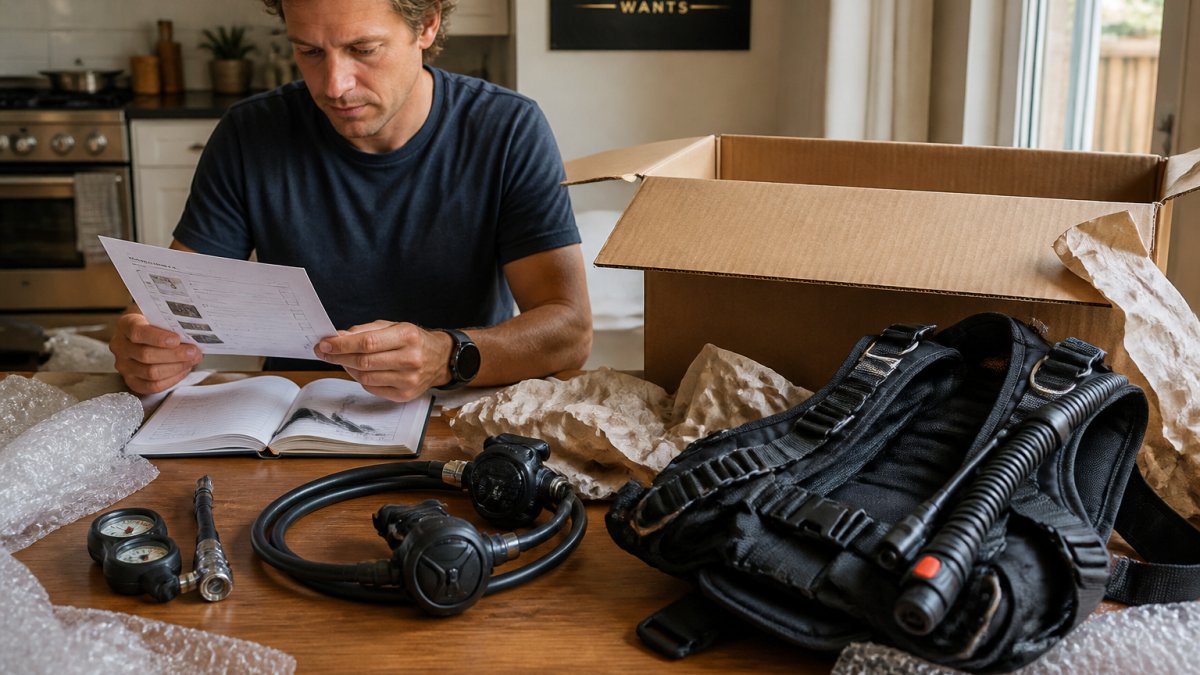
Inspect every item the day it arrives, then book your first service interval. A scuba regulator service schedule is not optional maintenance; it is part of owning life-support equipment.
Shop Smart. Shop Electrifick Wants. →
Day-One Inspection Checklist
Check the delivery against your order line by line before you discard any packaging:
- Confirm every item and size matches the invoice
- Inspect hoses, seals, and threads for cracks or shipping damage
- Test the dive computer powers on and the pressure gauge reads zero
Pay particular attention to regulator hoses and O-rings, which can crack in cold shipping conditions, and to cylinder valves, which should arrive capped and undamaged. If anything looks wrong, stop and contact the seller before the return window closes.
Professional Inspection and Setup After Delivery
A new regulator should be checked by a qualified technician before its first dive, especially if it shipped across the country or sat in a warehouse. Many dive shops offer a bench check and a pool test for a modest fee, often $25 to $75, and some include it with a purchase. Have the technician confirm intermediate pressure, check for leaks, and verify the second-stage cracking effort.
Service Intervals, Warranty, and Records
Keep a written service log with dates, technician names, and parts replaced. Warranty coverage on regulators and computers often depends on documented annual service by an authorized technician, so a missing record can void a claim. Store the log with your purchase receipt and warranty registration confirmation.
For guidance on regulator care and inspection standards, the Divers Alert Network safety resources publish practical equipment guidance for recreational divers.
Common Mistakes When You Get Professional Scuba Gear Delivered
The costliest errors happen before and after checkout, not during it. Ordering a wetsuit in street-clothes sizing, skipping the warranty registration, and assuming a bundle fits are the three we see most.
- Buying on price alone and discovering the seller offers no service support
- Skipping the sizing chart and paying return shipping on a wetsuit
- Ignoring compatibility between a computer, transmitter, and regulator
The U.S. Consumer Product Safety Commission maintains recall information worth checking against any equipment you buy, new or used.
Conclusion
Ordering professional dive gear online works well when you verify the seller, match gear to your certification, measure before you buy, and inspect the delivery the day it lands. The gear itself is rarely the problem.
Electrifick Wants stocks scuba accessories alongside our curated electronics, with fast and reliable shipping and free shipping on orders over $50. Shop smart. Shop Electrifick Wants.
Frequently Asked Questions
Can scuba gear be shipped directly to my home?
Yes. Regulators, BCDs, dive computers, masks, fins, and wetsuits all ship to residential addresses. The main exception is compressed air cylinders, which most carriers treat as hazardous and many retailers will not ship filled. Some sellers also restrict certain items to ground freight. Before ordering, confirm the carrier, whether the cylinder arrives empty, and whether the seller offers free shipping over a set order threshold. Keep the tracking number and inspect every box for damage before signing.
Do you have to be certified to buy scuba gear?
No. You can buy a regulator, BCD, or dive computer without any certification card. Certification only matters when you book a charter, rent tanks, or fill cylinders, since operators ask for proof of training. That said, buying life-support equipment before you finish your open water course is usually a mistake. You will not yet know what fits your body or your diving. Take the class first, rent for a few dives, then order gear that matches how you actually dive.
Should I buy scuba gear from a dive shop or online?
Both work, and the right answer depends on the item. Masks, wetsuits, and BCDs benefit from an in-person fit, so try them locally if you can. Regulators, computers, lights, and accessories are standardized enough that ordering online is fine, provided you verify the dealer is an authorized seller for the brand. Authorized dealers protect your warranty. When you get professional scuba gear delivered, save the invoice and serial numbers, since service centers ask for proof of purchase.
What should I check when professional scuba equipment arrives?
Open every box within the return window and check four things. First, confirm the model and serial numbers match your invoice. Second, inspect for shipping damage, especially on regulator yokes, gauge faces, and computer screens. Third, test the fit of anything wearable while the tags are still on. Fourth, do a breathing test on the regulator and confirm the BCD inflates and holds air. Log any issue with photos and contact the seller before the return period closes.