

Table of Contents
- Why Your Scuba Mask Needs Regular Cleaning
- What You'll Need Before You Start
- Step-by-Step: How to Clean Scuba Diving Masks After a Dive
- How to Clean a New Dive Mask Before First Use
- How to Defog a Scuba Mask and Stop Fogging for Good
- Scuba Mask Cleaning Products: What to Use and What to Avoid
- How to Store a Scuba Mask So It Lasts
- How Often to Clean and Inspect Your Mask
- Frequently Asked Questions
Last Updated: October 12, 2026
Why Your Scuba Mask Needs Regular Cleaning
A scuba mask is one of the few pieces of dive gear that touches your face on every single dive. That is exactly why it gets dirty so fast. Salt crystals, sunscreen, skin oils, and sand all build up on the lens and skirt.
At Electrifick Wants, we hear from divers who cannot figure out why a mask that worked fine last season now fogs on every descent. The answer is almost always buildup. Learning how to clean scuba diving masks properly solves most of these problems before they start.
Here is what most guides miss: a dirty mask is not just annoying. Grit trapped in the skirt can scratch the lens and break the seal. The Divers Alert Network guidance on gear care notes that basic equipment maintenance prevents many avoidable issues underwater.
So cleaning is not cosmetic. It protects your gear and your dive.
What You'll Need Before You Start
Gather a few simple items before you touch the mask. You probably already have most of them at home.
- Fresh water (never hot)
- A soft, lint-free cloth
- Mild dish soap
- A soft-bristle toothbrush
- A clean towel
- A small plastic tub or sink
Skip anything abrasive. Paper towels, rough sponges, and scouring pads will scratch the lens and dull the frame.
Step-by-Step: How to Clean Scuba Diving Masks After a Dive
A quick routine after every dive keeps a scuba mask in working shape for years. The whole process takes about five minutes.
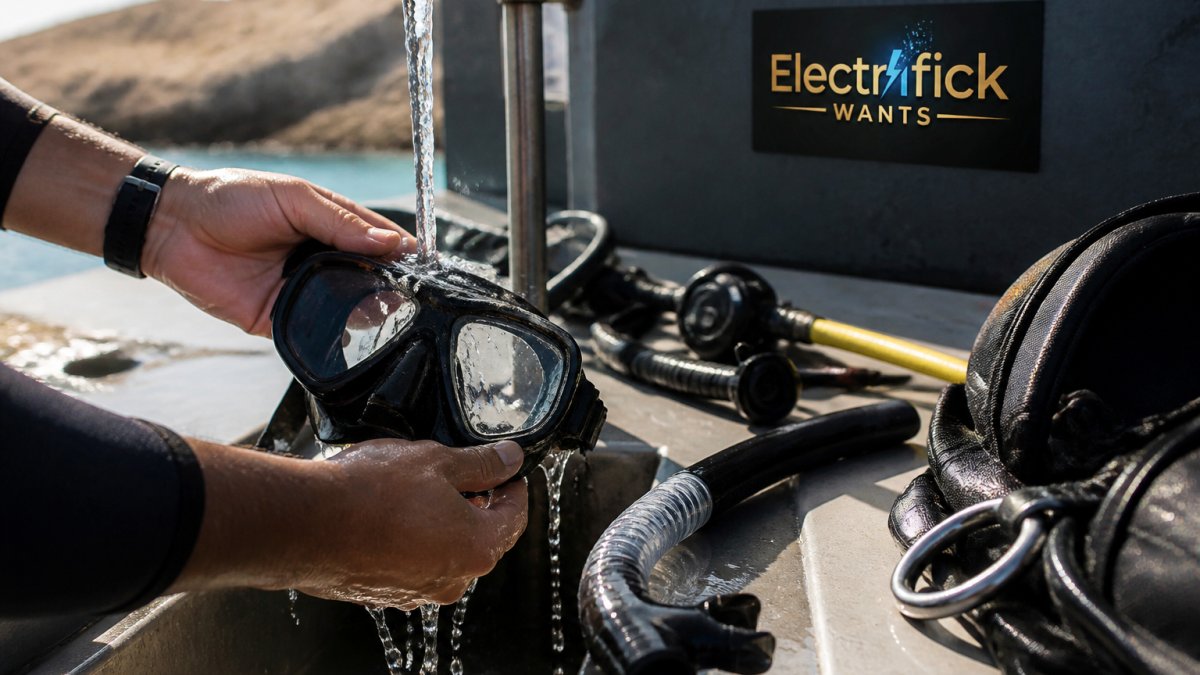
Rinse with Fresh Water Immediately
Rinse the mask with fresh water as soon as you can after leaving the water. Warm water works better than cold for breaking down salt, but never use hot water. Heat can warp the frame and damage the silicone skirt.
Do not let a wet, salty mask sit in a gear bag overnight. Salt dries into hard crystals that scratch the lens the next time you handle it.
Soak to Loosen Salt, Sand, and Debris
Fill a tub or sink with fresh water and let the mask soak for 10 to 15 minutes. This loosens salt, grit, and sand trapped in the skirt folds and frame edges.
For heavy buildup, add a splash of white vinegar to the water. Vinegar cuts through mineral deposits and dried salt without harming silicone.
Wash the Skirt and Frame with Mild Soap
Add a drop or two of mild dish soap to the water. Gently rub the skirt and frame with your fingers. Use a soft toothbrush to reach the corners where the frame meets the lens.
Rinse everything thoroughly under running fresh water. Soap left behind can irritate your skin and cloud the lens.
How to Clean a New Dive Mask Before First Use
A brand-new mask ships with a manufacturing film on the lens, a residue left over from molding and packing. That film causes fogging until you remove it, and it is the most common reason a new mask fogs on its first dive. The trick is removing the film without damaging the surface underneath, and the right method depends on what your lens and frame are made of.
Match the Method to the Material
Most recreational masks use tempered glass lenses with a silicone skirt and a plastic or polycarbonate frame. Each material tolerates different treatments.
- Tempered glass lenses: Accept mild abrasives like non-gel toothpaste, a dedicated mask scrub, or a soft flame pass. Glass is hard enough to survive gentle abrasion without scratching.
- Silicone skirts and straps: Tolerate mild soap, warm (not hot) water, and white vinegar. They do not tolerate bleach, ammonia, alcohol, or petroleum-based solvents, which degrade the silicone and shorten its life.
- Plastic and polycarbonate frames: Tolerate mild soap and soft cloths only. Abrasives dull the finish, and solvents can cloud or crack the plastic.
- Coated or prescription lenses: Treat as fragile. Skip toothpaste, skip the flame method, and use only a drop of mild dish soap on a soft cloth. Abrasives and heat can strip optical coatings that cost far more to replace than the mask itself.
If you are not sure what your lens is made of, assume it is coated and use the gentlest method.
Removing Manufacturing Film from a Glass Lens
Apply a small dab of gentle, non-gel toothpaste to the inside of the lens. Rub it in circles with your fingertip for about a minute. The mild abrasive lifts the silicone film off the glass. Rinse with fresh water and repeat two or three times. Then wash with mild soap and rinse again. The lens should feel squeaky clean, not slick.
Toothpaste and Other First-Use Methods
Toothpaste is the classic method, but it is not the only one. A few alternatives work just as well:
Shop Smart. Shop Electrifick Wants. →
- A drop of mild dish soap rubbed into the lens, then rinsed
- A commercial mask scrub made for this purpose
- A soft flame pass over the lens (only for tempered glass lenses, never plastic or coated lenses)
If you use the flame method, keep the flame moving and stay a few inches away. Glass can crack if you hold the flame in one spot, and the heat can damage the frame if you let it linger near the edges.
How to Defog a Scuba Mask and Stop Fogging for Good
Fogging happens when warm, moist air from your breath meets a cooler lens. The fix is a clean lens plus a thin layer that stops water droplets from clinging. Knowing how to defog a scuba mask comes down to two habits: keep it clean and treat it before every dive.
Use a dedicated anti-fog solution, or spit in the mask as many divers do. Rub it around, then rinse lightly. Leave a thin film on the glass.
- Clean the lens before every dive day
- Apply defogger right before you put the mask on
- Never touch the inside of the lens with dirty fingers
- Store the mask so the lens does not pick up oils
If fogging keeps coming back, the lens likely still has film or oil on it. Go back to the toothpaste step and clean it again.
Scuba Mask Cleaning Products: What to Use and What to Avoid
The right scuba mask cleaning products are simple and cheap. You do not need a shelf full of specialty gear, but you do need to know which common household cleaners will quietly ruin a mask.
What to Use
| Product | Best For | Avoid If |
|---|---|---|
| Mild dish soap | Routine cleaning | It contains harsh degreasers |
| White vinegar (diluted) | Salt and mineral buildup | You use it undiluted |
| Non-gel toothpaste | First-use film removal on glass | The lens has a coated surface |
| Commercial mask scrub | Stubborn film | You want a budget option |
| Anti-fog solution | Preventing fog | You apply it to a dirty lens |
What to Avoid, and Why
Most mask damage comes from cleaners that seem harmless. Here is what to keep away from your gear and the reason behind each warning.
- Bleach: Attacks silicone at the molecular level, causing the skirt to stiffen, discolor, and eventually crack. A stiff skirt will not seal against your face.
- Ammonia: Common in glass cleaners, but it degrades silicone and can cloud polycarbonate frames over repeated exposure.
- Alcohol (isopropyl, ethanol, hand sanitizer): Strips anti-fog and optical coatings and dries out silicone, leaving it brittle.
- Abrasive powders and scouring pads: Scratch glass and permanently dull plastic. Once a lens is scratched, no cleaning will fix it.
- Undiluted vinegar or acidic cleaners: Fine when diluted for soaking, but prolonged full-strength contact can dull frames and coatings.
- Hot water and dishwashers: Heat warps frames, distorts silicone, and can crack lenses. Hand-wash only, in warm water.
- Petroleum-based solvents (WD-40, gasoline, paint thinner): Dissolve silicone and destroy the seal. Never let these touch a mask.
How to Store a Scuba Mask So It Lasts
Storing a mask correctly matters as much as cleaning it. A mask that sits dirty and compressed will fog, crack, or lose its seal. Here is how to store a scuba mask so it stays ready.
- Let the mask air-dry fully before storing it
- Keep it in a hard case or a soft pouch
- Avoid folding or crushing the skirt
- Store it away from direct sunlight and heat
- Do not store it in a sealed bag while still damp
Silicone picks up odors and oils from other gear. Keep your mask away from sunscreen, fuel, and greasy items in your dive bag.
How Often to Clean and Inspect Your Mask
Clean your mask after every dive day, and do a deeper clean once a month during dive season. If you store a mask for months, give it a full clean before and after storage.
Inspect the mask each time you clean it:
- Check the lens for scratches and cracks
- Look for tears in the silicone skirt
- Test the strap for stiffness or cracks
- Make sure the frame is not separating
Replace any part that looks worn. A cheap strap or skirt is far less costly than a flooded mask at depth.
For divers who want reliable gear without the guesswork, our curated scuba accessories at Electrifick Wants are picked for quality and value. We also offer free shipping on orders over $50, so stocking up on care essentials is simple.
Frequently Asked Questions
How do you clean a scuba diving mask after a dive?
Rinse the mask with fresh water as soon as you finish diving to remove salt, sand, and sunscreen. Soak it in warm water for a few minutes to loosen debris, then wash the skirt and frame with a drop of mild dish soap. Rinse again, shake off excess water, and let it air-dry out of direct sunlight. This routine takes under five minutes and prevents residue from building up on the lens and silicone.
Can you use toothpaste to clean a dive mask?
Toothpaste works for removing manufacturing film from a new mask because the mild abrasive lifts residue off the glass lens. Use plain white paste, not gel or whitening formulas with beads, and rub it gently with your fingertips. Rinse thoroughly afterward. For routine cleaning after dives, skip toothpaste and use mild soap instead, since repeated abrasion can eventually scratch the lens or wear down coatings.
How do you prevent a scuba mask from fogging?
Fogging happens when warm moisture from your breath condenses on a cooler lens. Clean the lens properly to remove oils and film, then apply a dedicated defogger or a thin layer of saliva before each dive. Keep the mask on your face after splashing in so the lens stays warm, and avoid touching the inside of the lens with sunscreen-covered fingers. A clean mask fogs far less than a dirty one.
How should you store a scuba mask between dive trips?
Let the mask air-dry completely, then place it in a hard case or a soft pouch with the strap loosened. Store it away from direct sunlight and heat, which degrade silicone over time. Never leave a mask sealed in a plastic bag while damp, since trapped moisture encourages mold. If you store gear long-term, check the mask every few months for residue or stiffness in the skirt.
A foggy, gritty mask ruins a dive faster than almost anything else. The fix is a simple routine: rinse, soak, wash, dry, and store it right. At Electrifick Wants, we make it easy to find trusted scuba accessories and care products that fit your setup. Shop our scuba selection for quality gear, fast shipping, and free shipping on orders over $50. Shop Smart. Shop Electrifick Wants.