

Table of Contents
- Essential Scuba Gear Checklist for Travel: What to Pack
- Dive Computers and Instrumentation
- Exposure Protection: Wetsuits, Hoods, and Gloves
- How to Pack Scuba Gear for Flying
- Renting vs Buying Scuba Gear
- Scuba Gear Maintenance Tips for Travel
- Smart Travel Accessories for Dive Trips
- Frequently Asked Questions
Last Updated: October 4, 2026
Essential Scuba Gear Checklist for Travel: What to Pack
A scuba gear checklist works best when it separates what you carry on the plane from what you check.
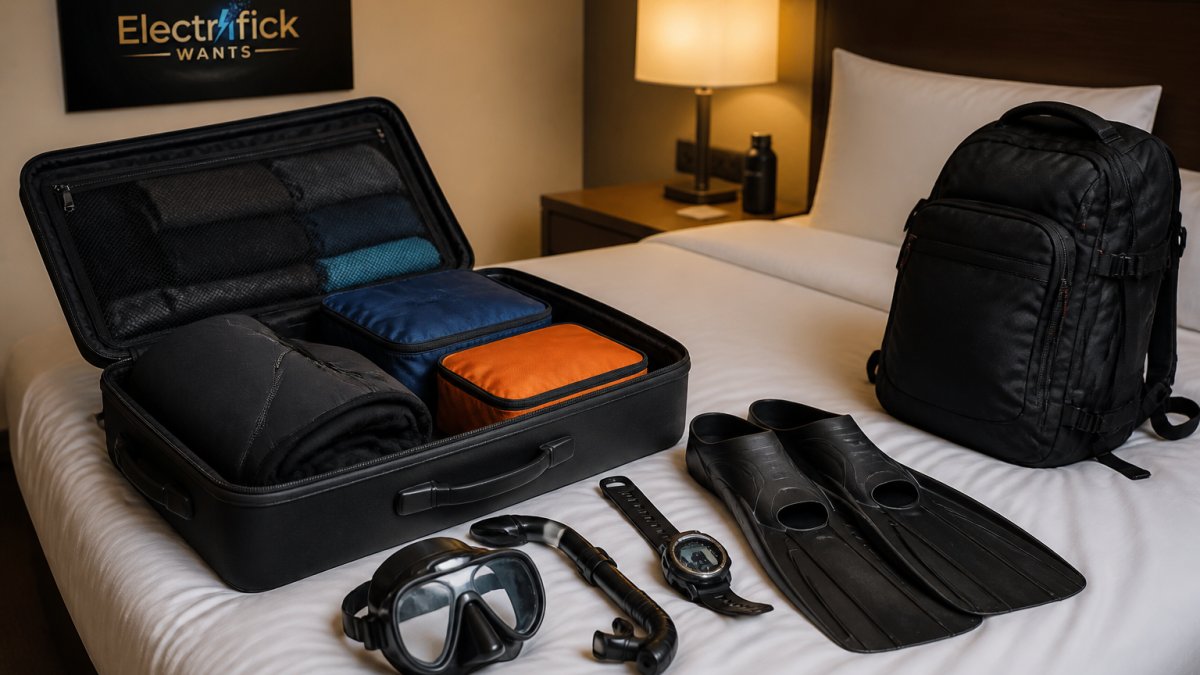
Airlines do not treat dive gear like ordinary luggage. A regulator set is life support equipment, and losing it in transit ends your trip before it starts.
The categories below cover personal gear, life support, instrumentation, exposure protection, and travel extras, plus the TSA and airline rules that catch divers off guard and how to judge rental gear before you trust it.
Personal Gear: Mask, Snorkel, Fins, and Booties
Your mask, snorkel, fins, and booties are worth buying first, because fit matters more than brand.
A common mistake is buying fins before booties. Dive booties determine the fin pocket size you need, so pick booties first, then match the fin.
Pack a small antifog solution in your carry-on, not your checked bag. Mask defog is a liquid, and liquids belong in your quart-size bag for security screening.
Life Support: Regulator Set and Buoyancy Control Device
Your regulator set and buoyancy control device are the two pieces you should carry on whenever the airline allows it, the most expensive and trip-critical items in your kit.
If you own your own BCD, check whether it uses a backplate and wing setup or a jacket style. Backplate systems pack flatter but need a yoke adapter for rental tanks with a different valve style.
Dive Computers and Instrumentation
A dive computer is the one instrument we tell every traveling diver to own rather than rent. Rental interfaces vary wildly, and learning a new one underwater is a bad time to figure out the buttons.
Your instrumentation list should include the dive computer, a backup timing device, and your dive logbook. Many divers log digitally, but a paper backup costs almost nothing and works when a battery dies.
| Instrument | Carry On or Checked | Why It Matters |
|---|---|---|
| Dive computer | Carry on | Expensive, hard to replace abroad |
| Backup timer | Carry on | Redundancy if the computer fails |
| Dive logbook | Carry on | Proves certification history |
| Certification card | Carry on | Dive shops ask to see it |
Exposure Protection: Wetsuits, Hoods, and Gloves
Exposure protection is the bulkiest part of your kit and the source of most packing weight.
A 3mm suit suits warm tropical water, while colder destinations call for 5mm or 7mm plus a hood and gloves.
A thicker suit keeps you warmer but takes far more room in your bag. For cold-water destinations, renting the suit locally often beats paying to check an extra bag.
How to Pack Scuba Gear for Flying
Learning how to pack scuba gear for flying comes down to one rule: anything you cannot replace at your destination goes in carry-on luggage; everything else rides in checked baggage. A lost regulator set on day one of a seven-day trip is a trip-ending event, and no airline reimburses you for the dives you missed.
Start with your regulator, dive computer, certification card, and mask in the cabin bag. Then pack the rest using this order:
- Lay your wetsuit flat at the bottom of the checked bag as a cushion.
- Roll fins and place them along the bag's edges.
- Fill the center with booties, hood, and gloves.
- Put your BCD on top, hoses tucked inside.
- Add a spare parts kit in an outer pocket.
- Weigh the bag before you leave home.
The Carry-On vs. Checked Split, Item by Item
Most divers overpack the cabin bag and then panic at the gate. Here is the split that works in practice:
| Item | Where It Goes | Why |
|---|---|---|
| Regulator set | Carry-on | Life support, expensive, hard to replace abroad |
| Dive computer | Carry-on | Same reason, plus battery rules |
| Mask | Carry-on | Fit is personal; rentals rarely match |
| Certification card | Carry-on (wallet) | Dive shops ask before they let you splash |
| Spare lithium batteries | Carry-on only | Federal rules prohibit them in checked bags |
| BCD | Checked | Bulky, replaceable at most destinations |
| Wetsuit, hood, gloves, booties | Checked | Bulky, and rentals are widely available |
| Fins | Checked | Long and awkward in a cabin bag |
| Dive knife | Checked | Blades are not permitted through security |
| Dive light (no batteries installed) | Either | Remove cells and pack them separately |
TSA and Airline Regulations for Scuba Gear
The Transportation Security Administration allows scuba gear in both carry-on and checked bags, but specific items have limits. You can review the current rules directly at TSA's official guidance on what you can bring through security.
The practical points most divers miss:
- Spare lithium batteries for dive lights and computers must go in carry-on, never checked baggage. Loose cells need to be in original packaging or a protective case with terminals taped.
- Dive knives belong in checked baggage, and some destinations restrict them further. A blunt-tip line cutter is a lower-friction alternative that clears security in most cases.
- Tanks must be empty with the valve removed or open, and most airlines will not carry them at all. Ship a tank via freight carrier and document the valve removal.
The Depressurization Problem Nobody Warns You About
Checked baggage holds are pressurized, but not to sea level. A sealed, hard-sided regulator case can build internal pressure differential during flight, making it stubborn to open at your destination. Leave a small vent open, or use a soft padded case with a breathable shell. Do not seal a regulator in a vacuum bag.
Weight and Volume Management
A full set of dive gear, regulator, BCD, wetsuit, fins, mask, computer, and accessories, commonly lands between 25 and 35 pounds before clothing. That is a problem on airlines that cap checked bags at 50 pounds and carry-ons at 22 pounds.
Three moves that actually save weight:
- Wear your heaviest shoes and jacket on the plane. It sounds obvious, but it moves two to four pounds out of the bag.
- Ship the wetsuit ahead if your destination has a dive shop that will hold it. A 5mm full suit is often the single heaviest item in the bag.
- Use a travel BCD if you own one. Backplate-and-wing setups pack flatter than jacket BCDs, but the plate itself is dense metal, a soft travel BCD can save several pounds.
Weigh your packed bag before you leave home and again before your return flight. Souvenirs and wet gear add weight on the way back, and return-leg overweight fees are the ones divers forget to budget for.
What to Do If Your Gear Does Not Arrive
File a claim at the airline's baggage desk before you leave the airport, most carriers require it within a short window, and doing it in person is faster than online. Keep your gear receipt and serial number photos in your phone. If your travel insurance covers dive gear, call the emergency line the same day.
Renting vs Buying Scuba Gear
Renting vs buying scuba gear depends on how often you dive. If you dive a few times a year on vacation, renting saves money and packing space.
But the decision most guides skip is how to vet rental gear in a shop you have never used, in a country whose equipment standards you may not know. That inspection is what keeps you safe.
A Rental Gear Inspection Checklist
Before you sign the rental form, ask to see and handle each item. A shop that will not let you inspect gear before it goes on your body is a shop to walk away from.
Dolphin Smart Bag Tracker for Travel →
Regulator
- Check the service sticker or log. No service in 12 to 24 months is a red flag.
- Breathe from both second stages at the counter. Any hiss, rattle, or wet breath means the exhaust valve or diaphragm needs attention.
- Check hoses for cracking, stiffness, or bubbles under a light flex.
BCD
- Inflate fully and listen for leaks for a full minute.
- Test the oral, shoulder, and lower dump valves one at a time.
- Check the inflator button for sticking and the corrugated hose for cracks.
Wetsuit
- Check seams at shoulders, knees, and crotch, that is where they fail first.
- Confirm the zipper glides without catching.
- Make sure the thickness matches the water temperature you will actually be diving, not what the shop advertises.
Dive computer
- Confirm the battery indicator is not low.
- Ask the shop to show you the button layout before you get in the water.
- Verify it is set to the right mode (air, nitrox, gauge) for your planned dive.
Fins and mask
- Try the mask on your face and inhale gently through your nose. If it seals and stays, it fits.
- Step into the fin pocket with your booties on. A fin that slides off in the water is a fin that ruins a dive.
What to Buy First, and Why
Buy your mask, computer, and regulator first. Rent the wetsuit, BCD, and fins until you know your travel pattern. Those three cover the items where fit and familiarity matter most, and they are the three you can carry on the plane.
A mask that fits is the difference between a comfortable dive and a mask full of water at 60 feet. A dive computer you already know is a safety device, not a gadget.
Scuba-Specific Travel Insurance and Documentation
Standard travel insurance often excludes scuba diving, or covers it only to a shallow depth limit, commonly 30 meters or 100 feet, sometimes less.
What to confirm before you buy:
- Medical evacuation coverage that includes hyperbaric treatment and transport to a chamber.
- Depth limit that matches or exceeds your planned maximum depth.
- Gear theft and damage coverage for your regulator, computer, and camera housing.
Carry digital and paper copies of your certification card, dive insurance policy number, and insurer emergency contact. If you are diving with a liveaboard or remote resort, give the operator your insurance details before you board.
Rent smart, buy the three items that touch your face and your breathing, and never travel to a dive destination without insurance that names scuba diving explicitly. The policy is the one piece of gear you cannot rent when you need it.
Scuba Gear Maintenance Tips for Travel
Gear maintenance on the road is simpler than most divers expect. Rinse everything in fresh water after your last dive of the day, dry it in shade, and store it loosely.
A few habits protect your investment:
- Soak your regulator with the dust cap on and the valve closed.
- Rinse the BCD bladder by adding a little fresh water and draining it.
- Dry your wetsuit inside out, then right side out.
If you are traveling with an underwater photography setup, treat the housing with the same care as your regulator. A flooded housing is an expensive lesson.
Smart Travel Accessories for Dive Trips
The accessories that earn their space solve a travel problem, not just look good in a gear bag. A few small items change the trip.
A surface marker buoy is worth carrying in areas with boat traffic, and it packs flat.
For keeping track of your bags, we stock the Dolphin Smart Bag Tracker for Travel, a practical tag for monitoring your luggage in busy airports and terminals. If you want something smaller, the Dolphin Smart Tracker Rex iOS is IP66 rated, runs on a replaceable CR2032 battery, and works with the Find My network with no subscription fee. For a full kit, the Apple AirTag (4 Pack) covers multiple bags at once.


A flag luggage tag also helps. Our Smart Bag Security Tag USA Flag Pack 2 makes a bag easy to spot on the carousel, and the Genuine Leather Passport Case adds RFID protection for your travel documents. A Pursonic 10,000mAh power bank keeps your dive computer app and phone charged through long travel days.
Dive insurance belongs on this list too. Emergency evacuation coverage is the one document you hope never to use, and the one you cannot buy after an accident.
Frequently Asked Questions
What should I pack for a scuba trip?
Pack your personal essentials first: mask, snorkel, fins, dive booties, and a dive computer. Add a regulator set and BCD if you own them. Bring a dive certification card, logbook, and any prescription mask inserts. For exposure protection, pack a wetsuit suited to the water temperature, plus a hood and gloves for colder dives. Include a spare parts kit with o-rings and silicone grease. Finish with travel accessories like a smart bag tracker, passport case, and power bank for your electronics.
How do I pack scuba gear for air travel?
Start by checking your airline's baggage rules for sporting equipment. Pack your regulator, dive computer, and other fragile items in a carry-on if allowed. For checked bags, use a padded gear bag and wrap your regulator in clothing or a protective case. Remove batteries from dive lights and pack them separately. Place heavy items like fins at the bottom of the bag. Use packing cubes to keep small parts organized. Always carry your dive certification card and a copy of your dive insurance in your carry-on.
Should I bring my own scuba gear when traveling?
Bring your own mask, snorkel, fins, and dive computer for comfort and hygiene. These items are personal and fit-dependent. For regulators and BCDs, it depends on your budget and how often you dive. Renting saves luggage space and weight, but you may get unfamiliar equipment. If you dive frequently or have a preferred setup, bring your own. If you dive once or twice a year, renting at your destination is often more practical. Always verify rental gear quality before your first dive.
How do you maintain scuba gear while traveling?
Rinse your gear in fresh water after every dive day to remove salt and sand. Soak your regulator with the dust cap on, and never press the purge button while soaking. Hang your wetsuit and BCD to dry in the shade, away from direct sunlight. Lubricate o-rings with silicone grease before storage. Keep your gear out of hot cars and direct sun. Before flying home, ensure everything is completely dry to prevent mildew. Pack a small spare parts kit with o-rings, a mask strap, and an antifog solution.
What is the most important piece of scuba gear to own?
A well-fitting mask is the most important piece to own because a leaky or uncomfortable mask ruins every dive. After that, a dive computer is essential for tracking depth, time, and safety stops. Your regulator set is critical for life support, but rental regulators are widely available and often well-maintained. If you are building your own kit, start with a mask, then a dive computer, then fins and a wetsuit. Add a regulator and BCD when your budget allows.
A dive trip only feels relaxed when your gear is sorted before you leave the driveway. The divers who struggle are the ones packing the night before a flight, guessing at airline rules and hoping the wetsuit fits. Electrifick Wants carries the travel accessories that make that process easier, from smart bag trackers and flag luggage tags to RFID passport cases and fast-charging power banks, all backed by fast shipping and free shipping on orders over $50. Shop Smart. Shop Electrifick Wants.