
How to Ensure Scuba Gear Fit: A Step-by-Step Guide
Table of Contents
- What You'll Need Before You Start
- How to Perform a Scuba Mask Fit Test
- Wetsuit Sizing Guide: Thickness, Thermal Layers, and Fit
- BCD Fit and Adjustment for Underwater Stability
- Fins, Regulators, and the Rest of Your Scuba Gear Fit
- In-Water Fit Testing Protocol and Mid-Dive Troubleshooting
- Common Mistakes That Ruin Scuba Gear Fit
- Frequently Asked Questions
Last Updated: September 25, 2026
What You'll Need Before You Start
Getting scuba gear fit right starts before you ever touch the water. Poor fit is one of the most common reasons new divers feel uncomfortable, burn through air faster, or cut dives short. This guide walks you through how to ensure scuba gear fit at every stage, from the dive shop to your first descent.
Here's what to gather before you start:
- Your certification card and logbook
- A swimsuit or thin base layer to wear under gear
- A dive buddy to check straps you can't see
- A mask, fins, BCD, and regulator (rented or owned)
- A calm pool or shallow water for testing
How to Perform a Scuba Mask Fit Test
A proper scuba mask fit test takes under a minute. Place the mask on your face without using the straps. Inhale gently through your nose. If the mask stays sealed and you feel light suction, the fit is right. If air leaks in, the mask is too big or the wrong shape for your face.
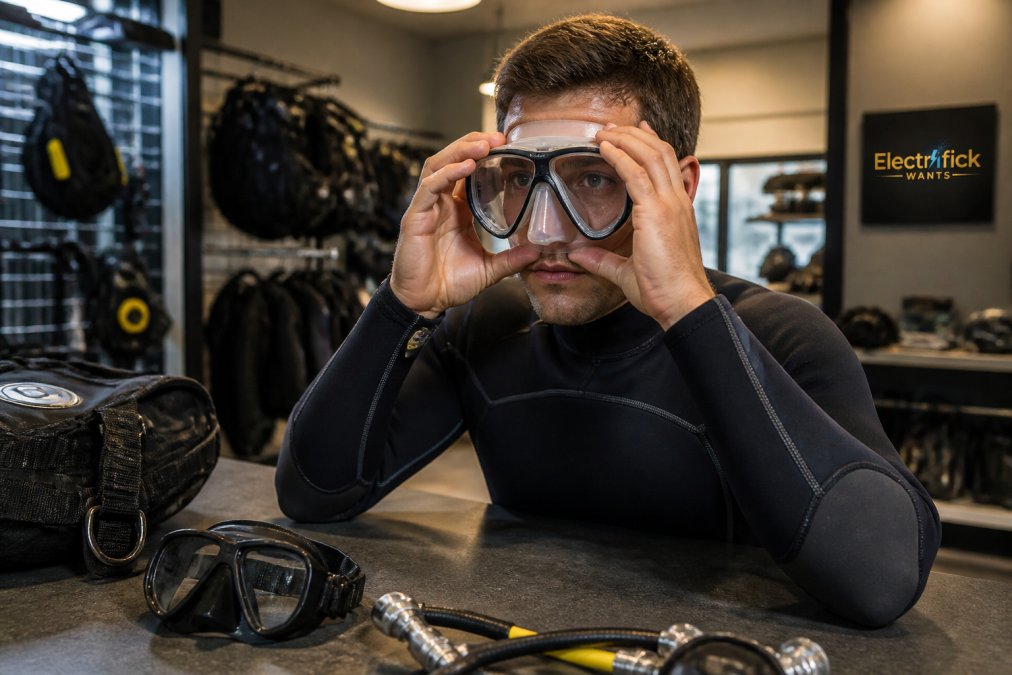
Dry Fit vs. In-Water Mask Seal Checks
The dry fit test catches obvious problems. The in-water check confirms them. In the water, a good silicone skirt should seal against your skin without pressure points. If water seeps in at the sides, the mask is too wide for your face.
- Check the seal with your head tilted down
- Smile and scrunch your face to test movement
- Confirm no hair is trapped under the skirt
Wetsuit Sizing Guide: Thickness, Thermal Layers, and Fit
A wetsuit should feel snug, not tight. It needs to touch your skin across your torso and limbs so water can't pool inside. If you can pinch more than an inch of loose neoprene at your lower back, the suit is too big.
| Suit Thickness | Water Temp | Best For |
|---|---|---|
| 3mm | 70°F and up | Warm tropical dives |
| 5mm | 60-70°F | Temperate water |
| 7mm | 50-60°F | Cold water |
| Drysuit | Below 50°F | Deep or frigid dives |
How Thermal Layers Change Wetsuit Fit
Adding a hooded vest or heated layer tightens the whole system. Neoprene compresses slightly at depth, so a suit that fits at the surface can loosen as you descend. Test your full setup, not just the base suit.
BCD Fit and Adjustment for Underwater Stability
A buoyancy control device has to do two jobs at once: hold the tank steady on your back and keep your head above water at the surface. If it rides up, twists, or squeezes your ribs, no amount of strap-fiddling will fix it, the problem is usually the size, not the adjustment.
Start With Torso Length, Not Chest Size
BCD sizing runs on torso length first. Measure from the top of your shoulder to the top of your hip bone. Manufacturers publish a torso range for each size, and a BCD built for a longer torso will ride up on a shorter frame no matter how hard you cinch the shoulders. A BCD built for a shorter torso will pull the tank down and put pressure on your lower back.
Lift Capacity and Your Diving Environment
Lift capacity is measured in pounds of buoyancy. A warm-water, single-tank, aluminum-80 setup typically needs far less lift than a cold-water diver wearing a 7mm suit, a hooded vest, and a steel tank. If your BCD cannot float your rig at the surface with the power inflator empty, it is undersized for the diving you are doing. Check the manufacturer's lift rating against the total negative buoyancy of your full setup, tank, weights, and suit compression at depth.
Cummerbund, Chest Strap, and Weight Distribution
The cummerbund carries most of the load. It should wrap snugly around your waist without digging into your ribs or riding above your hip bones. The chest strap keeps the shoulders from spreading but should never carry weight.
- Shoulder straps: snug, with room for two fingers under the webbing
- Cummerbund: firm contact across the belly, sitting on the hips
- Chest strap: light tension only, it is a stabilizer, not a load bearer
- Weight belt: sits on the hips, above the BCD, and must be releasable with one hand
How Thermal Layers Change BCD Fit
This is the part most guides skip. A BCD that fits over a rash guard will feel tight over a 5mm wetsuit and tighter still over a 7mm suit with a hooded vest. Neoprene also compresses at depth, so a suit that is snug at the surface loosens as you descend, and the BCD that felt perfect on the boat can shift on your back at 60 feet.
D-rings and Hose Routing
Once the BCD fits, check that the D-rings sit where your hands naturally fall. A console or octopus that pulls on your head or neck is a routing problem, not a fit problem, but it shows up as discomfort. Move the hose clips, not the straps.
Fins, Regulators, and the Rest of Your Scuba Gear Fit
Fins should fit like a firm handshake, not a vise. Your toes should just touch the end of the foot pocket. If your heel slides, add a fin sock or switch sizes.
- Foot pocket: toes touch, no heel slip
- Fin straps: snug, no ankle pressure
- Regulator mouthpiece: no jaw fatigue
- Octopus and hoses: no pull on your head
In-Water Fit Testing Protocol and Mid-Dive Troubleshooting
The only true test of scuba gear fit happens in the water. A mask that seals in a dive shop can leak at depth. A wetsuit that feels snug on land can flush cold water the moment you move. This section walks through a structured shallow-water fit test you can run in a pool or a calm, chest-deep area before you commit to a real dive, plus the fixes for the fit problems that show up mid-dive.
The Shallow-Water Fit Test: A Step-by-Step Protocol
Run this in order. Do not skip ahead, and do not descend past a depth where you can comfortably stand or surface.
- Surface float, BCD inflated. Put your regulator in and breathe normally for one full minute. Note any jaw fatigue, mask pressure, or shoulder pinch. If anything hurts now, it will hurt worse at depth.
- Mask seal without straps. Remove the mask strap from the back of your head, place the mask on your face, and inhale gently through your nose. It should stay sealed. Then put the strap back on and clear the mask by exhaling through your nose. If water seeps in at the sides, the skirt is the wrong shape for your face.
- Regulator breathing at depth. Descend to about 10 feet and breathe slowly for 30 seconds. A mouthpiece that feels fine on the surface can cause jaw ache once you are horizontal and swimming. If your jaw tires, the bite tabs are too large or the mouthpiece is too hard.
- BCD inflate and deflate cycle. At depth, add air until you are neutrally buoyant, then dump it fully. Watch where the BCD sits on your back. If it rides toward your neck, the torso length is wrong. If it twists to one side, the cummerbund is loose.
- Fin swim. Swim one slow lap. Your heel should not slide in the foot pocket, and your toes should just touch the end without curling. If your calves cramp within a few minutes, the blade is too stiff or the pocket is too tight.
- Weight belt check. At the surface, confirm you can release the belt with one hand and that it sits on your hips, not your waist. A belt that rides up under the BCD is a hazard, not a fit issue.
Mid-Dive Troubleshooting: Fixes You Can Do Underwater
Fit problems do not wait for the surface. Here is what to do when they show up at depth.
- Mask floods. Tilt your head back, press the top of the frame against your forehead, and exhale through your nose. If it keeps flooding, the skirt is the wrong shape, no amount of clearing will fix it. Ascend and swap the mask.
- Mask squeezes. Add a small puff of air through your nose. If the squeeze returns immediately, you are descending faster than you are equalizing the mask, slow the descent.
- BCD rides up. Reach back, grab the shoulder straps near your shoulders, and pull them down toward your hips. If it keeps riding up, the torso length is wrong and you should note it for the surface.
- Fin cramp. Stop kicking, flex your foot, and massage the arch through the boot. If the cramp returns, the pocket is too tight or the blade is too stiff. Do not try to adjust fin straps mid-swim, do it at the surface.
- Regulator jaw fatigue. Relax your jaw, let the mouthpiece rest between your teeth without biting down, and breathe from your diaphragm. If the ache persists, switch to your octopus and note the mouthpiece size for replacement.
- Weight belt shifting. At the surface, re-seat the belt on your hips. Underwater, do not try to re-thread it, signal your buddy and ascend.
What to Log After the Test
Write down every fit issue you noticed, even the small ones. Mask leak on the left side. Right fin heel slip. Jaw ache after 20 minutes. These notes tell you exactly what to change before your next dive, a different mask skirt shape, a fin sock, a softer mouthpiece, or a BCD one torso size down.
Common Mistakes That Ruin Scuba Gear Fit
The biggest mistake is buying gear without testing it in water. A mask that seals in the shop can fail at depth. A wetsuit that feels fine dry can flush cold water once you move.
Other frequent errors:
- Over-tightening straps until they cut off circulation
- Ignoring torso length when choosing a BCD
- Skipping the thermal layer during a fit test
- Wearing a loose weight belt that shifts mid-dive
- Never servicing gear, which lets straps and seals degrade
Frequently Asked Questions
How do I know if my scuba mask fits properly?
Place the mask on your face without tightening the strap. Inhale gently through your nose. If the mask stays sealed to your face and doesn't fall off, you have a good scuba mask fit test result. The silicone skirt should sit flat against your skin with no gaps. If you feel pressure points on your forehead or cheeks, try a different size or shape. A proper seal means no water enters during your dive.
What are the signs that a BCD is too big or too small?
A BCD that's too big will ride up around your neck when inflated and shift side to side during your dive. One that's too small restricts your breathing and creates pressure points under your arms. Check the cummerbund adjustment: it should be snug but allow a full deep breath. The chest strap should sit flat, not dig in. If the BCD moves more than an inch when you tug the shoulders, adjust the torso length or try a different size.
How should a wetsuit fit for optimal thermal protection?
A wetsuit should feel snug like a second skin, with no loose folds or baggy areas. Neoprene compression happens when a suit is too tight, reducing thermal protection. If it's too loose, water flushes through and you lose heat. Check the neck, wrists, and ankles for gaps. You should be able to move your arms and legs freely but feel gentle compression everywhere. A wetsuit sizing guide from the manufacturer helps match your measurements to the right size.
How do you know if your scuba fins are the right size?
Your toes should lightly touch the front of the fin pocket without curling. Too small and your feet cramp; too large and your foot slides, causing blisters and lost kick power. Try fins with your dive boots on, since boot thickness changes the fit. Adjust the straps and buckles for snug tension without cutting off circulation. If you can kick forcefully without your heel lifting, you have the right hydrodynamic fit.
Fit problems rarely fix themselves underwater. The smart move is to test every piece on land and in shallow water before you commit to a real dive. At Electrifick Wants, we make it easy to find quality scuba accessories, from masks and fins to the small parts that keep your setup working. Shop with a selection built for divers, backed by fast shipping and free delivery on orders over $50. Shop Smart. Shop Electrifick Wants.
